
The Department of Physics, School of Science, Walailak University, continues its “Nuclear Physics for Youth toward Sustainable Development” project for the third consecutive year in 2026, providing young learners with opportunities to explore nuclear science through real-world experiences that connect classroom knowledge, laboratory practice, and medical applications while supporting the Sustainable Development Goals (SDGs).
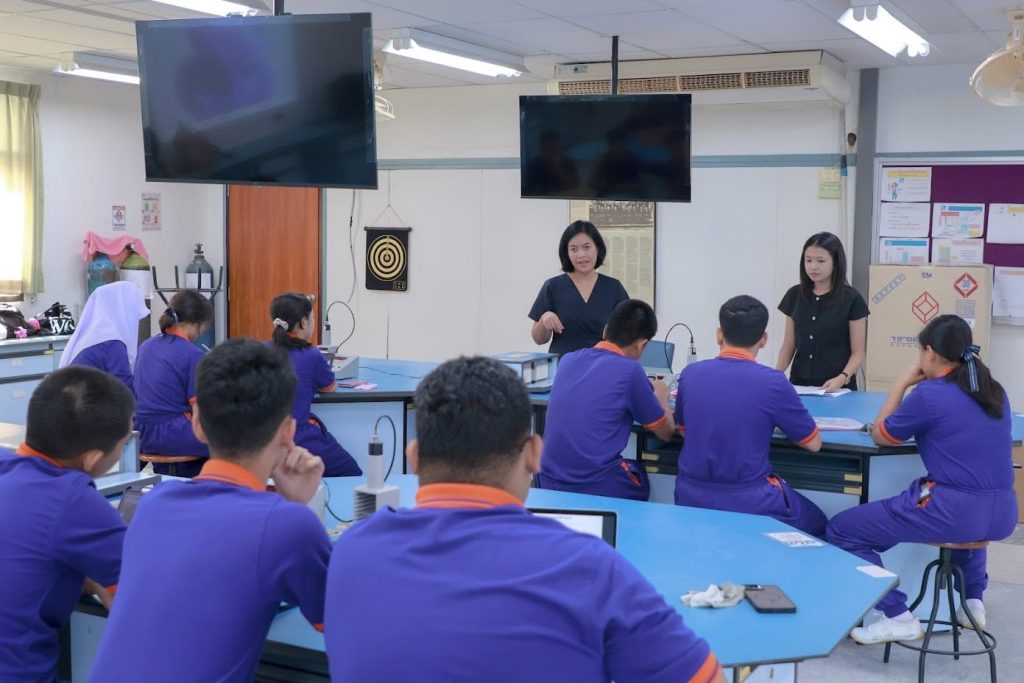
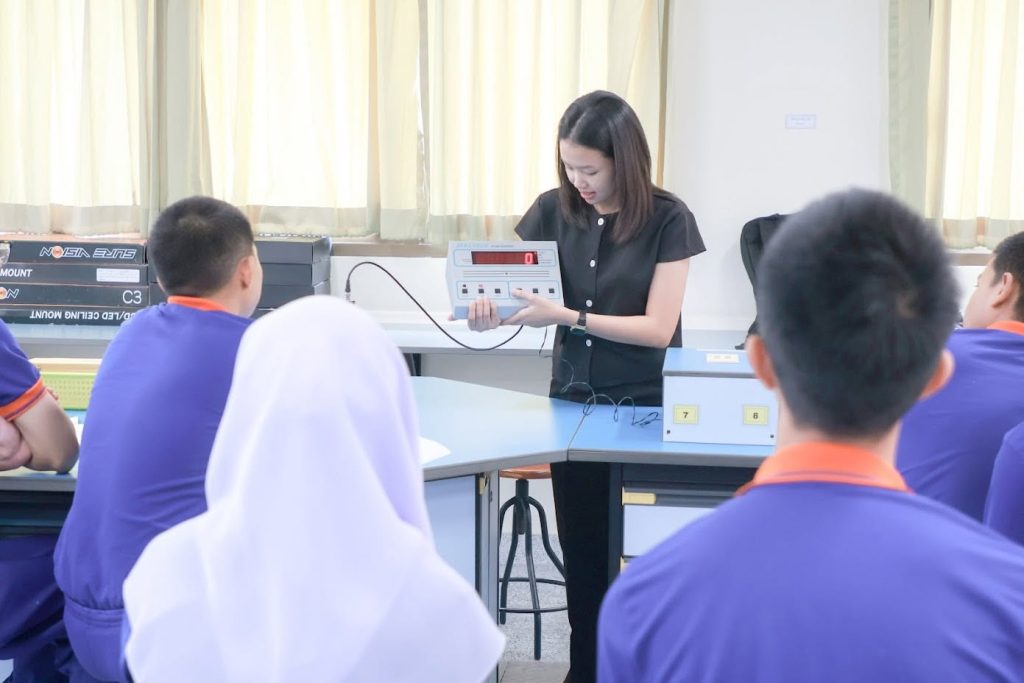
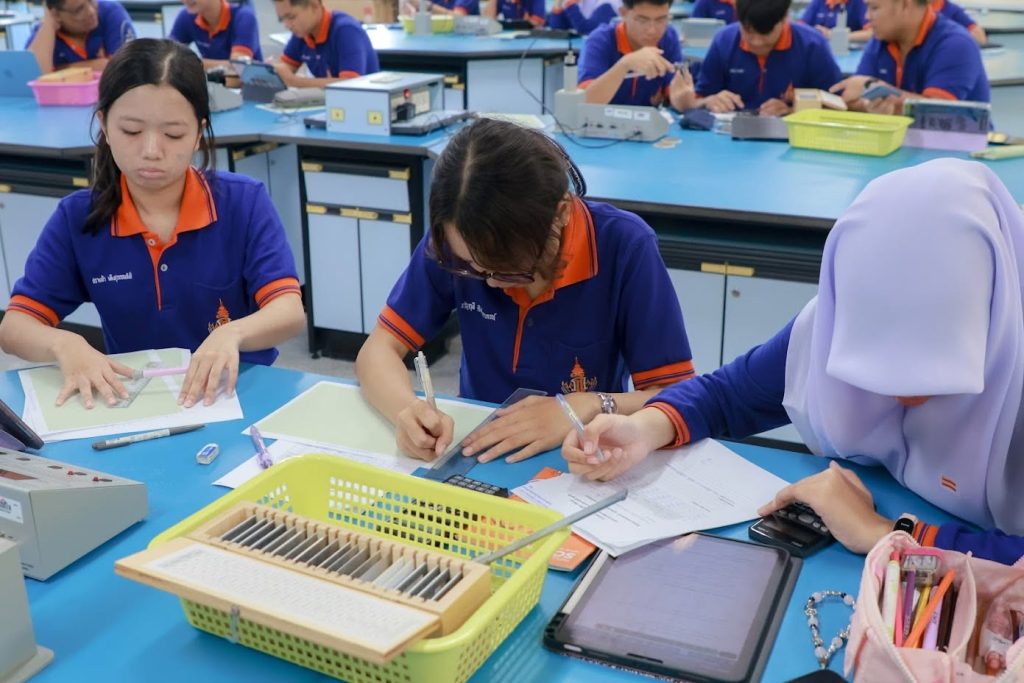
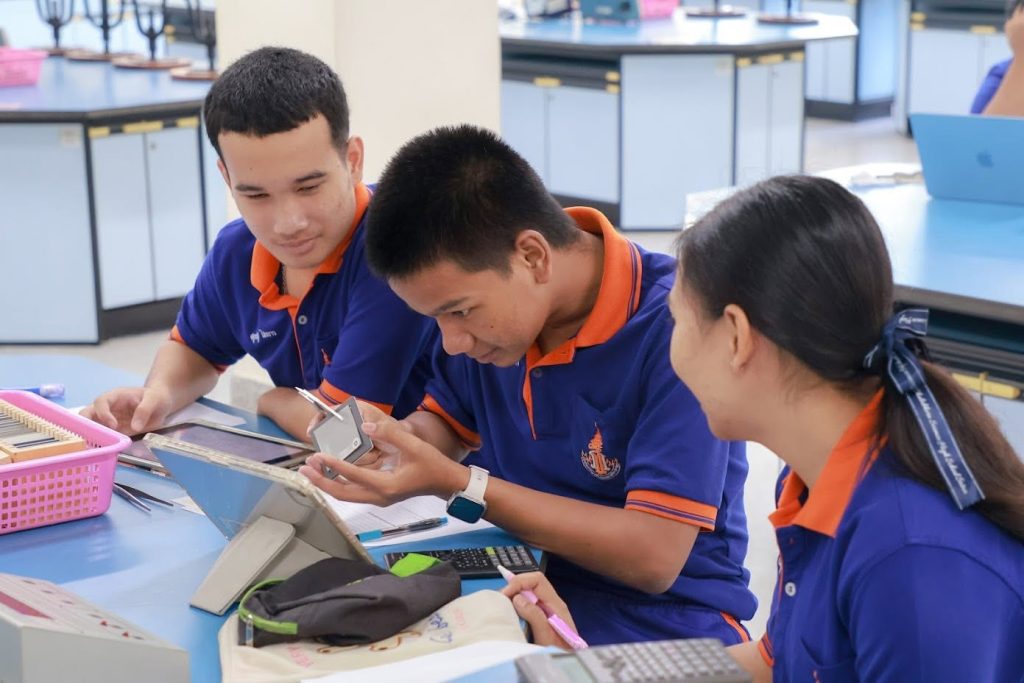
Students conduct a radiation measurement experiment in the Physics Laboratory at the Center for Scientific and Technological Equipment, Walailak University.
Photo credit: Audiovisual Unit, Princess Chulabhorn Science High School Satun
The Department of Physics, School of Science, Walailak University, has continued its 2026 academic service and social engagement initiative under the project “Nuclear Physics for Youth toward Sustainable Development.” The project aims to strengthen young people’s knowledge and understanding of nuclear science through learning activities that integrate theory, experimentation, and real-world applications. It also seeks to raise awareness of the role of science in improving quality of life and contributing to sustainable social development in alignment with the Sustainable Development Goals (SDGs).
The project is organized into 3 learning phases designed to guide students from classroom learning to hands-on practice and, ultimately, to knowledge sharing with society. Phase 1 consists of special lectures that establish fundamental knowledge of nuclear physics. Phase 2 focuses on experiential learning through laboratory activities and visits to medical learning facilities. Phase 3 provides opportunities for participating students to communicate and share the knowledge and experience they have gained with the wider community.
Now entering its third consecutive year, the project reflects the growing strength of collaboration among the university, schools, and related organizations. The initiative began in 2024 in collaboration with Princess Chulabhorn Science High School Nakhon Si Thammarat, with support from the Thailand Institute of Nuclear Technology (Public Organization), or TINT. In 2025, the network expanded to include Princess Chulabhorn Science High School Trang, bringing the number of participating schools to 2. In 2026, Princess Chulabhorn Science High School Satun joined the network, increasing the total number of participating schools to 3.
For the activities with Princess Chulabhorn Science High School Satun, the program began on 18 June 2026 with a special lecture entitled “Nuclear Physics and Its Applications.” The session was led by Assoc. Prof. Dr. Punsiri Dam-o Adamczyk, Asst. Prof. Dr. Sampart Cheedket, and Dr. Nawee Jaroonchokanan, lecturers in the Physics Program, School of Science, Walailak University. They were joined by Ms. Panthita Sangurai and Mr. Thanakrit Phetsong, scholarship students under the Promotion of Science and Mathematics Talented Teachers (PSMT) Project in the Bachelor of Science Program, Physics major.
A total of 18 students participated in the activity, including six Grade 11 students and twelve Grade 12 students. They were accompanied by Mr. Sirachat Chanthongpoon, Ms. Chanikarn Sramunee, and Ms. Nichakan Thapchaiyut, teachers from Princess Chulabhorn Science High School Satun. The activity was held at the school and provided students with essential background knowledge before progressing to experiential learning in Phase 2.
From Theory to the Laboratory: Learning about Radiation through Real Experiments
In Phase 2, the students and teachers participated in nuclear physics laboratory activities at the Center for Scientific and Technological Equipment, Walailak University. The students investigated the inverse square law of gamma radiation and the attenuation of gamma radiation in materials, allowing them to connect theoretical physics concepts with actual measurements and experimental data.
Students gained hands-on experience using a Geiger–Müller detector and a radiation counter and learned how a Cs-137 radiation source is used in laboratory experiments under appropriate radiation safety controls and procedures. Beyond operating the equipment, students practiced systematic scientific experimentation, including controlling experimental conditions, collecting and recording data, repeating each measurement at least 3 times, plotting graphs, analyzing and discussing results, and drawing conclusions based on experimental evidence.
The laboratory experience enabled students to recognize that learning nuclear physics involves more than memorizing equations or theoretical principles. Scientific concepts can be tested, interpreted, and understood through experimentation and evidence-based data analysis.
From the Laboratory to Medical Applications of Physics
Following the laboratory session, students extended their learning to real-world applications of physics in medicine during a visit to the Walailak University Medical Center. Asst. Prof. Thanyaporn Direksunthorn served as the guest speaker and guided students through the radiology department, where they learned about medical imaging technologies used in clinical diagnosis and explored the connections between physical principles and healthcare.
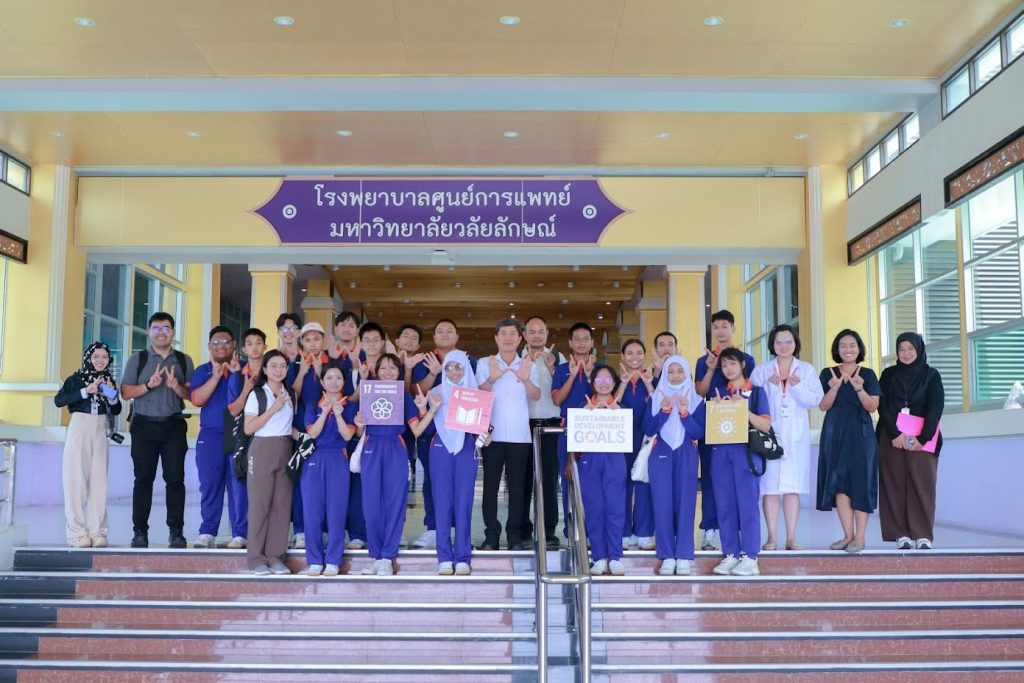
Students visit the Radiology Department at Walailak University Medical Center to learn about radiological technologies and their applications in medical diagnosis.
Photo credit: Audiovisual Unit, Princess Chulabhorn Science High School Satun
Students first learned about ultrasound imaging, which uses high-frequency sound waves to create images of internal organs and tissues. They explored its operating principles, clinical applications, and distinctive advantages as a diagnostic imaging technique.
They then studied X-ray imaging, including the basic principles of image formation, its benefits in medical diagnosis, potential radiation risks, and fundamental radiation protection measures for the safe and appropriate use of ionizing radiation.
learned how cross-sectional images of the human body are produced. They also gained insight into the role of radiologic technologists in operating the equipment and supporting safe and effective diagnostic procedures.
Students also learned about bone densitometry, which is used to assess bone mineral density and compare measured values with reference standards to evaluate possible abnormalities or health risks related to bone condition. They were also introduced to mammography, a specialized X-ray imaging technique designed for examination of breast tissue and detection of abnormalities.
The visit concluded at the Magnetic Resonance Imaging (MRI) unit, where students learned how magnetic fields and radiofrequency waves are used to produce detailed images of structures inside the human body without the use of ionizing radiation. Particular attention was given to MRI safety, especially the strict control of metallic objects and devices near the strong magnetic field.
Exposure to these different technologies also enabled students to compare the physical principles underlying medical imaging systems and understand that each modality has distinct mechanisms, advantages, limitations, and purposes. These range from sound waves in ultrasound, X-rays in conventional radiography, CT, and mammography, to magnetic fields and radiofrequency waves in MRI.
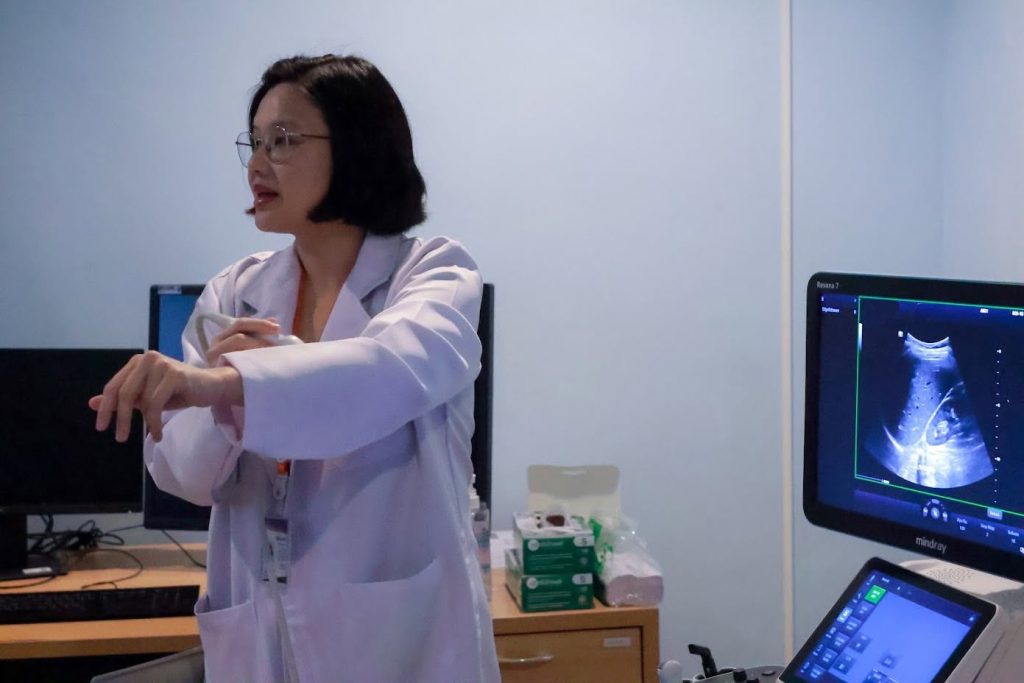
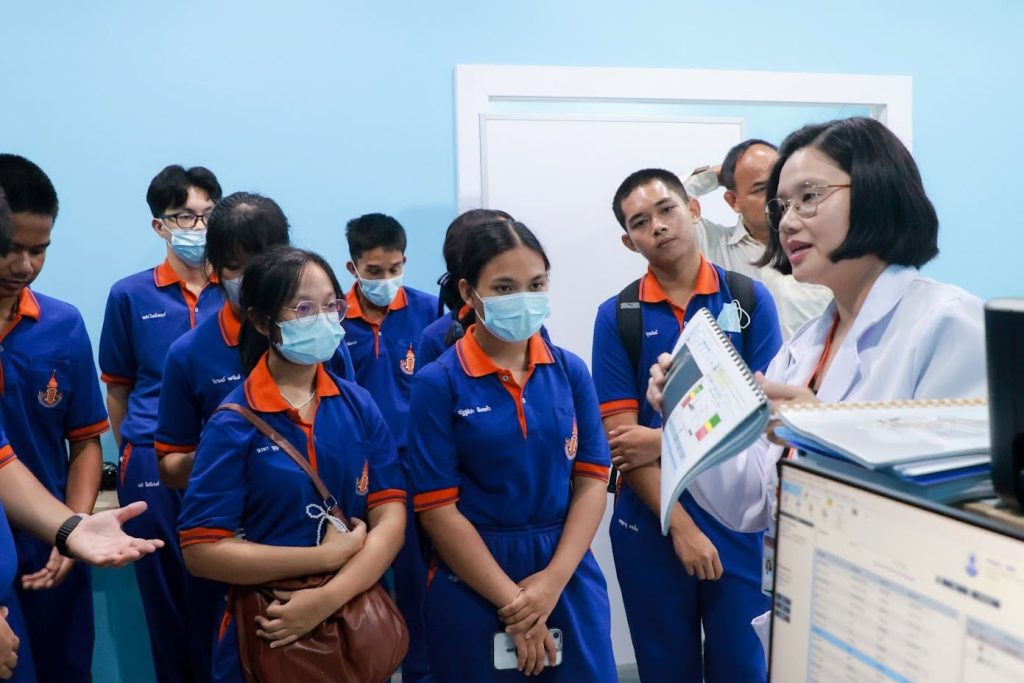
A lecture on medical diagnostic imaging delivered by Asst. Prof. Dr. Thanyaporn Direksunthorn,
a faculty member and researcher at the School of Medicine, Walailak University, specializing in diagnostic radiology and clinical preventive medicine.
Photo credit: Audiovisual Unit, Princess Chulabhorn Science High School Satun
Learning through Experience: Developing Young Scientists for a Sustainable Future
Phase 2 was designed not only to provide students with hands-on experience in nuclear physics experiments but also to help them connect classroom knowledge with experimentation and extend that understanding to real-world applications, particularly in medicine and healthcare.
Throughout the learning process, students developed both scientific knowledge and essential skills, including the use of scientific instruments, measurement, data collection and analysis, graph construction and interpretation, evidence-based discussion, and understanding the benefits and safe use of radiation and physics-based technologies. These competencies provide an important foundation for developing scientifically literate young people who can apply scientific knowledge responsibly for the benefit of society.
The experiences gained during this phase will also serve as preparation for Phase 3: Community Outreach, in which participating students will move from being “learners” to becoming “knowledge communicators.” They will have opportunities to share the knowledge and experiences they have acquired with others, extending learning from the classroom to society and reflecting the project’s broader goal of using science as a driving force for the sustainable development of people, communities, and society.
The Physics Program, School of Science, Walailak University, would like to express its sincere appreciation to the Director and staff of the Center for Scientific and Technological Equipment, Walailak University, for providing the laboratory facilities, scientific instruments, and equipment, as well as for their valuable support in facilitating the nuclear physics laboratory activities for the participating students.
We also extend our sincere appreciation to the Walailak University Medical Center for providing access to its facilities and radiology learning resources, offering students a valuable opportunity to learn from real-world medical technologies and practices. This experience played an important role in connecting physics concepts learned in the classroom with their practical applications in healthcare and contributed significantly to the success of this academic service initiative for youth development.